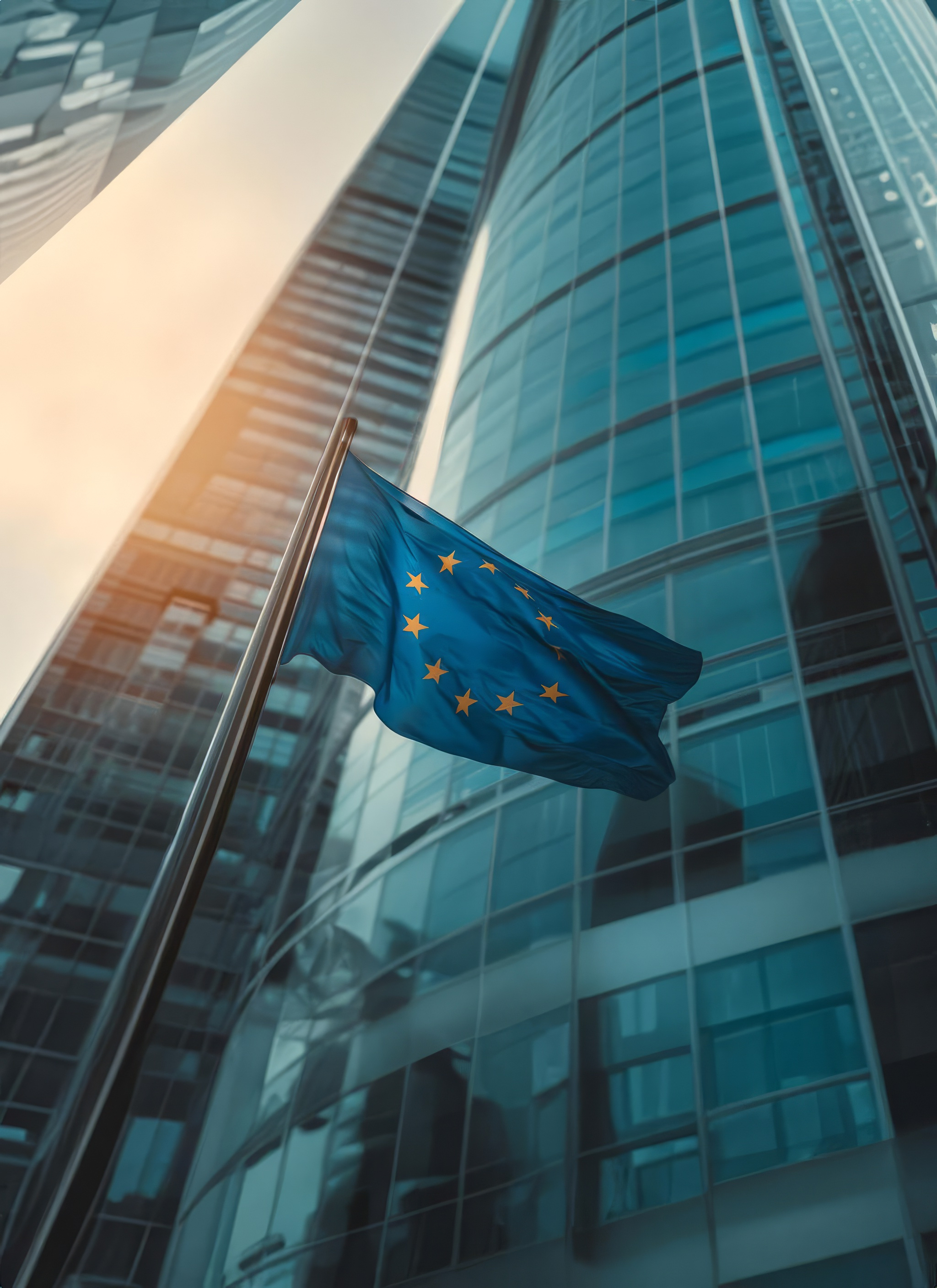
On the EU's Agenda – Key Issues for the Swedish Tech Sector
The Swedish business sector is among the most digitized in the EU. From AI and cybersecurity to data sharing and digital infrastructure—decisions made within the EU have a major impact on Swedish tech companies’ ability to develop, invest, and grow. TechSverige works on several issues that are critical to the industry at the EU level.
The EU is an important market for Swedish tech. Common rules can make it easier to reach more customers and develop new services across national borders. At the same time, the way policies and regulations are designed affects companies’ ability to turn innovations into business and compete internationally. The Swedish business sector is among the top users of AI, cloud services, and data analytics in the entire EU. Sweden has more than twice as many companies that process data relative to its population compared to the EU average. TechSverige therefore monitors developments within the EU and works to promote decisions that strengthen the competitiveness of Swedish tech companies.
A Voice for Swedish Tech in Brussels
An important part of this work is carried out through Digitaleurope, a European trade association that brings together companies that develop and use digital technology, as well as national trade associations. The organization represents the industry in the EU legislative process and serves as an important forum for collaboration on Europe’s digital development.
TechSverige CEO Åsa Zetterberg has been a member of Digitaleurope’s Executive Board since July 2026. This board position strengthens TechSverige’s ability to contribute Swedish perspectives to the development of the organization’s work. The organization is heavily involved in EU processes concerning issues such as AI, innovation, the skills supply, cybersecurity, and digital infrastructure.
“Our member companies need favorable conditions to develop new technology, grow, and compete internationally. That’s why their experiences need to be taken into account when shaping Europe’s tech policy. Through Digitaleurope, we can join forces with others and have a greater impact on issues that are crucial for the Swedish tech sector,” says Åsa Zetterberg, CEO of TechSverige.
Tech Employers' Advocacy Efforts in the EU
A growing proportion of the regulations affecting the world of work also originate at the EU level. TechSverige therefore monitors both how existing regulations are implemented and applied, and new initiatives where the wording of the regulations can still be influenced. This includes, among other things, the implementation and application of the Pay Transparency Directive and the Platform Workers Directive, as well as new initiatives such as the Quality Jobs Act and the Fair Labor Mobility Package. The issues range from AI and algorithmic management to pay transparency, skills supply, labor mobility, and working conditions. Through the “ Replies to public consultations ” and other advocacy processes, TechSverige highlights the perspective of tech employers and works to ensure that new regulations and their implementation are clear, proportionate, and practicable. The regulations should safeguard the Swedish labor market model without creating unnecessary administrative burdens or hindering innovation and competitiveness. TechSverige also monitors current case law from the Court of Justice of the European Union, particularly with regard to the impact it may have on member companies.
Simpler rules and greater scope for innovation
Fredrik Sand, an economic policy expert at TechSverige, is monitoring developments within the EU. On the agenda are both the implementation of new regulations and efforts to streamline the overall digital legislation.
“For businesses, it’s the big picture that counts. Overlapping regulations and extensive administrative burdens divert resources away from development and innovation. We’re working to ensure that these simplifications are felt in practice and strengthen businesses’ ability to invest and grow in Europe,” says Fredrik Sand.
It is now imperative to continue the regulatory simplification efforts that have been initiated. This concerns, for example, the implementation of the AI Regulation, which affects the conditions for developing and using AI in Europe. This summer’s decision on the AI Omnibus includes, among other things, postponed requirements for high-risk systems and simplifications for certain companies. For TechSverige, it is essential that the regulatory framework allows room for innovation and that duplicate regulations are eliminated.
The provisions regarding digital infrastructure in the EU’s upcoming Digital Networks Act (DNA) are also crucial. TechSverige has emphasized the need for the DNA to create better conditions for investment and lead to genuine regulatory simplification by completely phasing out outdated rules. The regulatory framework needs to take into account markets such as Sweden and the other Nordic countries, where digitization and network expansion are already well advanced.
There are several other areas that are important to the Swedish tech sector and are currently being discussed in the EU:
- The European Commission’s proposal to reform the Public Procurement Directive entails a comprehensive review of public procurement rules and aims, among other things, to simplify procurement processes and strengthen the ability to take quality and innovation into account rather than relying solely on the lowest price. TechSverige advocates for a regulatory framework that promotes competition, opens the door to new and innovative solutions, and makes it easier for companies to participate in public procurement.
- The Swedish Cybersecurity Act, which implements the EU’s NIS2 Directive, has been in effect since January 2026. More businesses are now covered, and the requirements for companies’ own security measures have been tightened. This affects the tech industry both through requirements imposed on businesses and through the increased need for secure digital solutions. Tech companies also help other businesses meet these requirements. TechSverige is advocating that telecom companies should not be forced to finance oversight through fees. No other NIS2 sector is required to do so.
- The Data Act has been in effect since September 2025 and affects, among other things, access to data from connected products, data sharing, and switching cloud service providers. As part of the ongoing regulatory simplification efforts, TechSverige has championed several key issues regarding voluntary data sharing, the protection of trade secrets, and the right to compensation when government agencies require companies to disclose data.
- The proposed regulation on responsible and accountable digital environments —the EU KIDS Act—aims to strengthen the protection of children in digital environments through measures such as age limits and age verification. For TechSverige, it is important that the protection of children be strengthened through clear, proportionate, and technology-neutral rules that safeguard personal privacy without creating unnecessary double regulation.
- Data centers are a fundamental part of the digital infrastructure and are crucial to the development of AI, cloud services, and other digital solutions. The EU’s initiatives in this area influence the conditions for investment and business establishment. TechSverige advocates for technology-neutral and predictable regulations that promote investment, efficient use of resources, and access to fossil-free electricity and grid capacity.
Member companies' experiences strengthen advocacy efforts
How do EU policies affect your company’s ability to develop, invest, and grow? TechSverige welcomes concrete examples that can contribute to efforts to improve conditions for the industry.
“The experiences of our member companies lend weight to our advocacy efforts. They help us show policymakers the consequences of various proposals and the changes needed to strengthen the Swedish and European tech sectors,” says Fredrik Sand.