Demand for AI skills is growing rapidly in the labor market
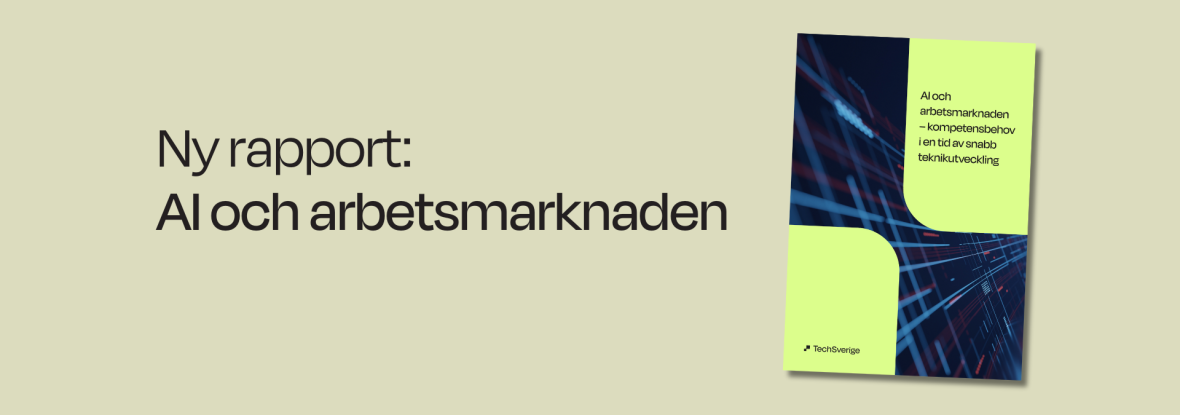
Demand for AI skills is growing rapidly in the Swedish labor market. This is shown in TechSweden's new report AI and the labor market – skills needs in an era of rapid technological development, which is based on an analysis of over 16,000 job advertisements, studies, and testimonials from companies.
The report shows that demand for AI skills in job advertisements has increased by 328 percent since 2016. Although this development is partly from a low base, a clear trend is evident: AI is now mentioned in almost twice as many occupations as eight years ago. At the same time, the use of AI in the workplace is growing rapidly: one in four companies uses AI, compared to one in ten the year before.
"AI is one of the most radical technological shifts in a very long time. Sweden's competitiveness is determined by how well we use technology, and expertise is absolutely crucial in this regard. Without targeted efforts, the shortage of people with sufficient AI skills risks becoming a brake on innovation, jobs, and growth, says Ana Andric, economic policy expert at TechSverige.
AI is spreading rapidly – but expertise is lagging behind
Demand for skills is growing both within and outside the tech industry. The number of professions where AI is mentioned in job advertisements at the Swedish Public Employment Service has increased from 48 to 92, and machine learning and data-related skills also dominate in professions that previously lacked a technical focus. In the tech industry, companies report clear shifts in skill profiles: developers are increasingly working with AI integration and data management, while new roles in data governance and AI architecture are emerging.
AI is changing the labor market on several levels, across industries, occupations, and different groups of workers. This is particularly evident in occupations that have long been the first step into working life. When work processes are automated, roles change and the barriers to entry can become higher for young people and recent graduates taking their first steps into the labor market.
Sweden is facing a major skills shift. The need for tech specialists is already high, and demand for AI skills is growing fastest. Therefore, the workforce must be equipped—both through further education and retraining and an education system that meets the needs of the future.
"For Sweden to be able to take full advantage of AI, broad engagement and activities are needed from individuals, companies, authorities, and academia. But it also requires even clearer political prioritization, direction, and long-term investments in skills. Strengthening both the breadth and depth of AI knowledge is one of the most important issues for the future of the Swedish labor market and competitiveness, says Ana Andric.
To secure Sweden's supply of skilled labor and fully leverage the opportunities offered by AI for jobs, growth, and competitiveness, TechSverige proposes the following measures:
1. Introduce a national program for broad AI skills to equip the entire labor market
2. Secure cutting-edge expertise for Swedish competitiveness
3. Attract and develop the AI talents of the future
4. Introduce an AI skills boost for small and medium-sized enterprises (SMEs)
5. Establish a national forum for AI and the labor market
6. Reduce employer contributions for new graduates and introduce a national model for trainee positions
Read the report here: AI and the labor market – skills needs in an era of rapid technological development
Read the interview with Ana Andric, economic policy expert at SvD Näringsliv here