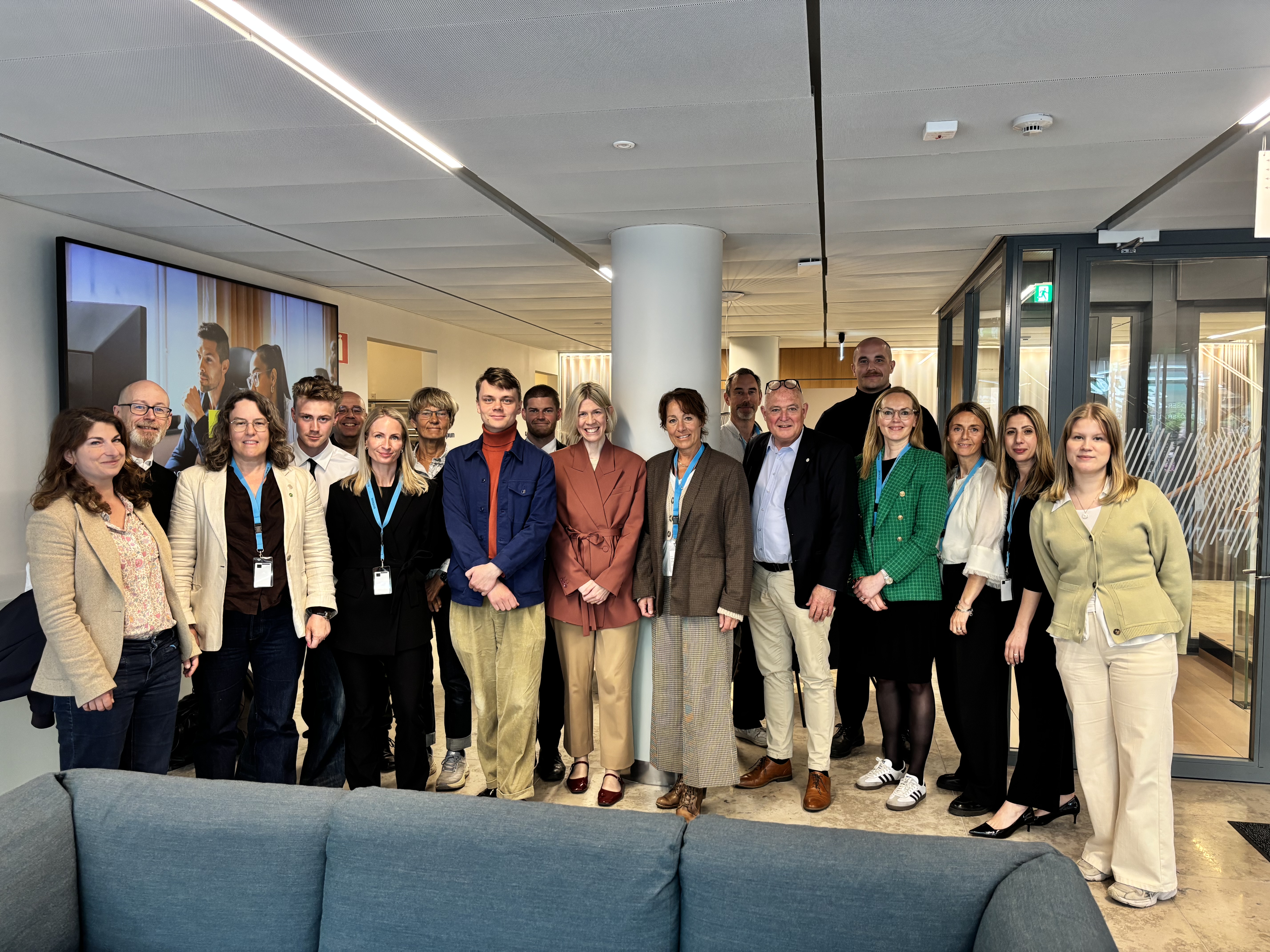
Roundtable Discussion: Help More Recent Graduates Take Their First Step on the Career Ladder
On May 19, TechSverige and Akavia brought together representatives from politics, higher education institutions, student organizations, and the business community for a roundtable discussion on recent graduates’ entry into the labor market. The discussion was based on our joint report, “Recent Graduates, AI, and the Path to the Labor Market,” as well as the concerning trend in which an increasing number of young college and vocational school graduates are struggling to find their first skilled job.
During the discussion, there was broad agreement that entering the labor market has become both more difficult and more complex. The participants noted that economic conditions play a major role, but that rapid advancements in AI may also affect the demand for entry-level talent. At the same time, it was emphasized that it is still difficult to fully distinguish between cyclical and structural changes.
Several participants highlighted the importance of strengthening the link between education and the workforce early on in students’ academic careers. Karlstad University was cited as a good example due to its efforts to strengthen ties with the workforce and create early points of contact between students and employers. The need for more practice-oriented collaborations, part-time jobs, and long-term student contacts was also discussed as important pathways into the labor market.
Employers pointed out that, in the current economic climate, many companies are looking for candidates who can make an immediate operational contribution, which risks raising the bar for entry-level workers. At the same time, it emerged that they often encounter obstacles in the recruitment process because clients—not least public sector actors and government agencies—set very high and detailed requirements for several years of work experience even for roles where junior-level skills could be relevant. Several participants described how this risks excluding recent graduates from the labor market and hindering companies’ ability to invest in and develop future talent.
At the same time, the importance of daring to invest in young talent was emphasized, as was the fact that the skills of the future are not solely about technical knowledge but also about adaptability, the ability to collaborate, and an understanding of the potential of AI in business operations. Several participants highlighted the need for a better balance in job requirements and the importance of teams with diverse levels of experience and skills.
The discussion also touched on the need for better statistics and earlier warning signs to understand how recent graduates are affected by changes in the labor market. Several participants pointed out that current unemployment statistics risk underestimating the problem, since many young people do not qualify for unemployment benefits and therefore do not register as job seekers. This underscores the need for society to be prepared with the right measures and tools to be able to act early when conditions change.
In conclusion, the importance of continued dialogue and collaboration between the political sphere, academia, and the business community was emphasized to ensure that more young people have the opportunity to establish themselves in the labor market and that Sweden capitalizes on the skills needed for future growth and competitiveness.
TechSverige and Akavia would like to extend our warmest thanks to all participants from academia, the business community, and the political sphere for their valuable insights, constructive input, and engaged discussion on one of the most critical workforce development issues of our time. A special thank you to the participants who shared research, experiences, and concrete examples from both the education sector and the labor market. Together, we are helping to strengthen the pathways between education and the workforce for the next generation of talent.
Read our joint report here:Report