Tech for a digital welfare state – a reform that provides everyone with digital security and skills
Digital transformation must include everyone
Digitalization now shapes nearly every aspect of life. We book healthcare appointments, interact with government agencies, run businesses, study, and stay in touch with loved ones through digital services.
But not everyone is keeping up.
Approximately one in five older people do not use the internet, while more and more public services require digital solutions. In addition, four out of ten eighth-grade students lack basic digital skills. Development is at a standstill here – digital competence is not increasing in line with society's demands.
For a country that has long been seen as a digital pioneer, it is time to gather strength once again – so that digitalisation becomes an opportunity for everyone. The home PC reform laid the foundation for an entire generation that took the leap into the digital society. Together with entrepreneurship, innovation, and long-term reforms for the business and investment climate, this created the digital foundation that today supports large parts of the Swedish economy. Now it is time to take the next step.
Tech that strengthens freedom, security, and opportunities
Digitalization should not be an obstacle. It should simplify life.
When more people can use technology on their own terms, it strengthens their independence in everyday life. It becomes easier to manage healthcare matters, bank accounts, and government services. More people can work flexibly, pursue further education, and take advantage of new opportunities.
It is about technology that works for ordinary people in their everyday lives, not just for experts. Digital inclusion is fundamentally a freedom reform – and an investment in Sweden's long-term strength.
The digital welfare state
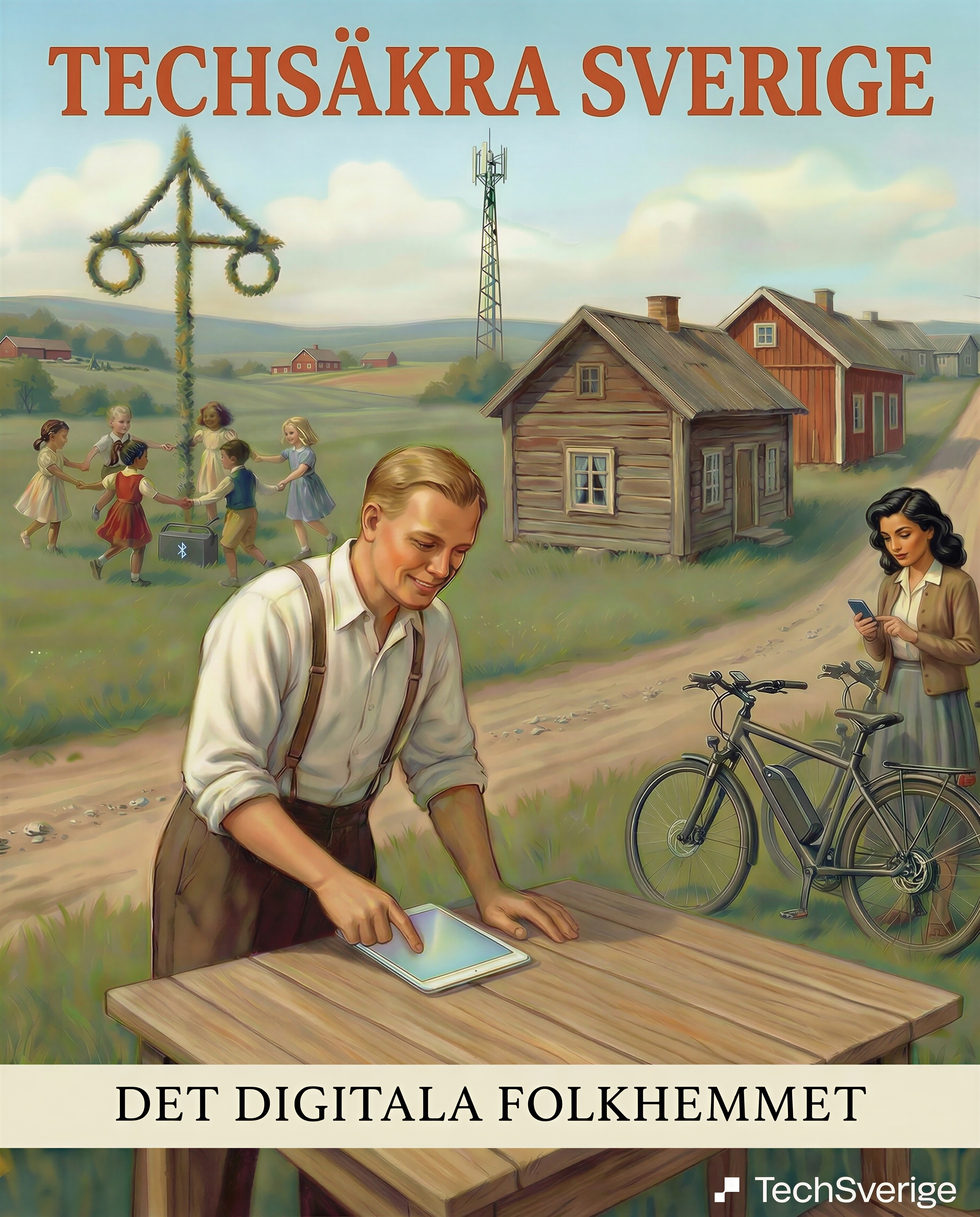
A broad national reform is needed to equip the entire population—children, the elderly, and working people—for a society where digital literacy is as essential as reading and writing.
1. Strengthen digital learning for children and young people
Schools cannot bear sole responsibility for children's and young people's digital skills. In order for more people to develop knowledge in digital technology, programming, and AI, investments are needed in leisure activities where technology can be explored in a practical and enjoyable way. Leisure-based technology activities already play an important role in sparking interest, boosting self-confidence, and reaching groups that would otherwise risk being left out.
Therefore, a national program is needed to coordinate digital learning outside of school hours, similar to Canada's CanCode initiative, where the government provides long-term funding to non-profit organizations that offer free activities in programming and AI. A corresponding Swedish program could create stability, scale up successful initiatives, and contribute to a broader supply of skills.
The government should develop a national strategy for digital competence that covers leisure time and give the relevant authorities a clear mandate to ensure equal conditions, long-term coordination, and systematic follow-up throughout the country.
2. Secure digital everyday life for older people – with support close to home
Digital services should increase independence, not cause concern. For many older people, the transition to digital technology is a big step, while contact with healthcare, banks, and government agencies is increasingly taking place digitally.
That is why support must be available close to where people live. Municipalities, adult education providers, and civil society organizations must offer simple and practical help with e-services, secure logins, banking, digital healthcare, security technology, and protection against fraud.
Municipalities should be given a clear mandate and long-term conditions to offer this support throughout the country, so that no one is left behind as society becomes digitized.
The goal is simplicity, security, and independence in later years.
3. Lifelong digital training throughout working life
Technology and AI are changing job roles in almost every industry. In order for more people to be able to adapt, develop, and take on new jobs, continuous skills development throughout working life is required.
Introduce a national skills upgrade for broad AI competence, integrating AI throughout the entire education chain, from elementary school to higher education and study associations. Develop short, flexible, and work-oriented courses for professionals and create better conditions for small and medium-sized enterprises to invest in AI skills through targeted tax deductions. Continuing education should be a natural part of working life, not an exception.
When the digital welfare state becomes a reality
Once the reform has been implemented, more people will be able to participate fully in the digital society – older people with security, professionals with new opportunities, and young people with inspiration to choose the path of technology.
It reduces digital exclusion, strengthens people's independence, and enables more people to participate fully in society.
Overall, the reform lays the foundation for a new digital welfare state – where technology becomes an opportunity for everyone, throughout the country.
.