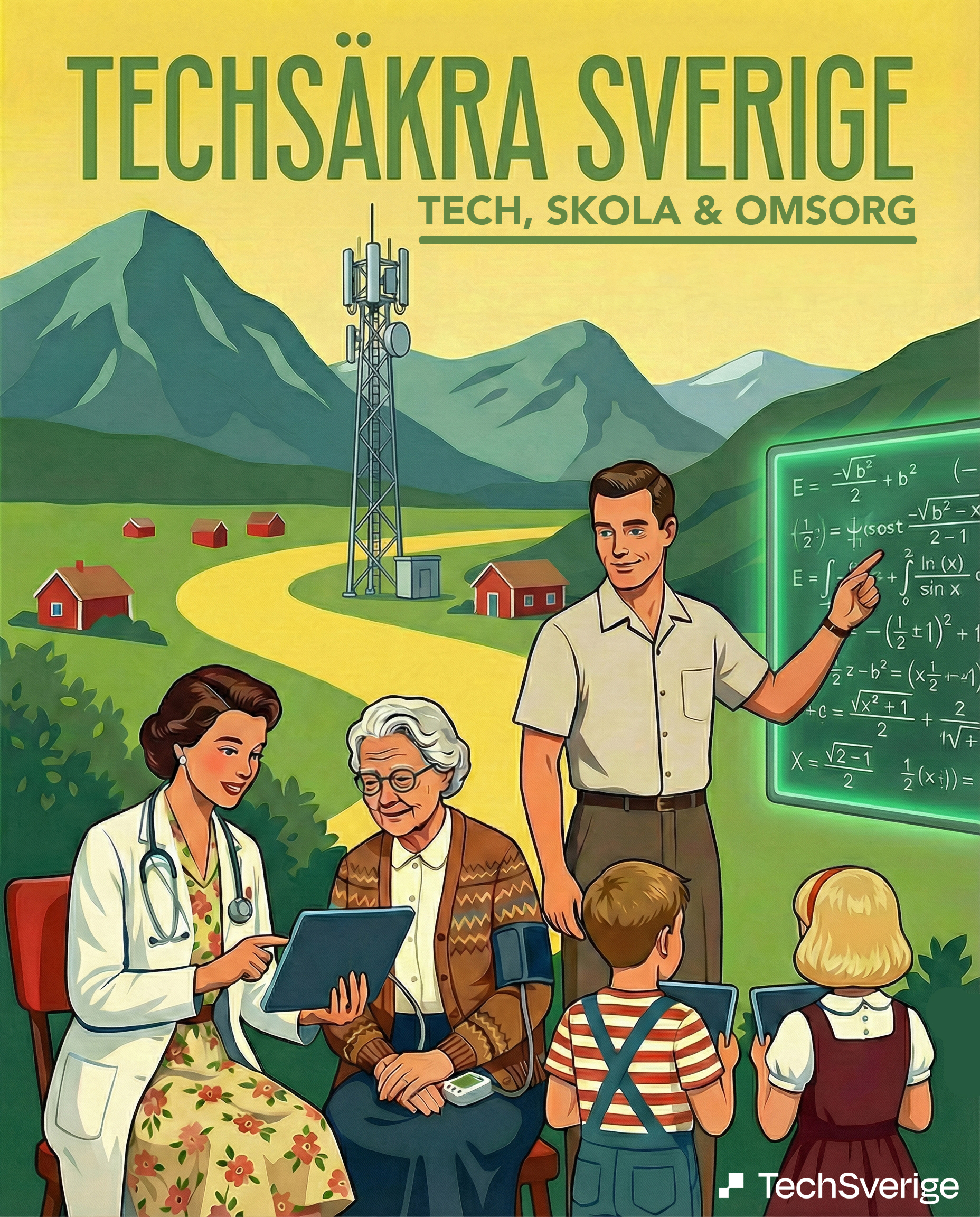
Technology, Education, and Healthcare
A reform that strengthens the core of the welfare system
Welfare is evident in people's daily lives
When a child doesn’t receive the support they need in school—or leaves the classroom without the digital skills required for the future—when a patient waits too long for care, or when an elderly person feels anxious at home, the challenges facing our welfare system become all too real.
Schools are grappling with academic challenges and unequal outcomes. Health and social care are under pressure from an aging population, an increase in chronic diseases, and staff shortages. Today, an ever-growing share of resources is being allocated to administration and emergency responses, rather than preventive measures and personalized support.
At the same time, an increasingly digital society is placing new demands on knowledge and skills. Students and teachers in schools, as well as healthcare and social services staff, need not only access to new technology—but also the ability to understand digital systems, use AI responsibly, and navigate a data-driven world.
For the welfare system to be sufficient and maintain high quality, it must evolve in step with the digital reality.
Technology that supports the mission of social welfare
Technology already gives us the opportunity to organize our welfare system in a smarter and more humane way. It is not an end in itself, but when used correctly, it strengthens the core mission of the welfare system: knowledge, care, and security.
In schools, the focus is on giving students a solid foundation in digital literacy and an understanding of AI—skills that are essential for future studies, work, and civic life. At the same time, digital tools can contribute to better individualization and more time for learning.
Welfare technology can make healthcare and social care more preventive, more accurate, and more personalized—regardless of where in the country you live. Through self-monitoring at home, digital supervision, smart planning, AI support, and simplified documentation, health declines can be detected earlier, unnecessary interventions avoided, and time freed up for human interaction.
Technology should not replace people—but rather give professionals better opportunities to succeed.
Technology, Education, and Healthcare – A Digital Boost for the Core of the Welfare System
The reform makes technology an integral part of the core of our welfare system—for better learning, safer care, and more time for human interaction.
1. Provide all students with a solid foundation in digital and AI-related skills in school
All students should graduate from elementary school with the ability to understand, evaluate, and use digital tools. Digital literacy is now as fundamental a skill as reading, writing, and arithmetic—and is essential for further education, employment, and participation in society.
Digital and AI-related knowledge should therefore be a clear, cross-curricular goal in the curriculum, with a focus on source criticism, information management, privacy, and an understanding of how algorithms and AI affect everyday life. Teachers should receive professional development and appropriate support, and schools should have equal access to modern tools and teaching materials.
2. Invest in a digital care initiative – three billion kronor per year
A three-year government initiative is being launched, providing three billion kronor annually to municipalities to scale up welfare technology that has already proven effective. The funds will be tied to clear implementation plans, skills development, and monitoring of actual results.
The initiative will prioritize solutions that free up staff time, enhance safety for older adults and people in need of care, improve the work environment, and reduce the need for emergency interventions. The focus will be on widespread implementation—not new pilot projects.
3. Make self-monitoring the new standard in primary care
Let self-monitoring and remote monitoring become the national standard for people with long-term and chronic conditions. As healthcare moves closer to the home, health deterioration can be detected earlier, emergency hospitalizations can be reduced, and patient safety can be improved.
Self-monitoring empowers individuals, makes healthcare more equitable across the country, and frees up resources where they are needed most.
When Technology, Education, and Healthcare Become a Reality
Once the reform is implemented, more students will graduate with the digital skills required for future studies and careers. Teachers will receive better support and have more time for teaching, healthcare workers will have more time with patients, and care workers will have more time with the elderly.
With the right support, more people should be able to live at home longer, waiting lists should be reduced, and social services should be more equitable throughout the country.
Technology should not replace people—but rather enable the welfare system to meet growing needs while ensuring quality, security, and equality.
By making self-monitoring and remote monitoring the new standard, healthcare can become more preventive and less reactive. Calculations show that self-monitoring for heart failure can reduce the need for inpatient care by up to 44 percent, corresponding to approximately 200 freed-up hospital beds. A hospital bed costs an average of about 3.2 million Swedish kronor per year, while the number of primary care visits can be reduced by over 20 percent.
Overall, the reform strengthens education, enhances security in social services, and improves the quality of healthcare—and ensures that welfare resources go further for more people.